Cold metal forming: how it works, advantages, and limitations in industrial production
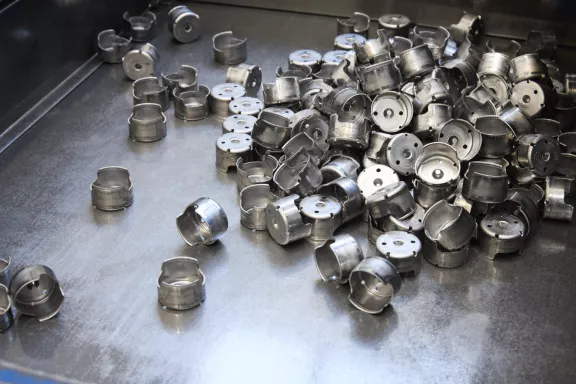
Minifaber specializes in cold metal forming for high-quality semi-finished and finished products, based on customer requirements.
Cold metal forming is a technology designed for the production of complex metal components intended for mass production. In these cases, dimensional accuracy, repeatability, and cost control are fundamental requirements.
Specifically, it is a cold deformation process, which takes place at room temperature and allows the metal to be shaped without removing material, thus exploiting the plastic deformability of the material.
It is not just a manufacturing process, but a true integrated industrial process, which, as such, starts with the design of the die and ends with the inspection of the finished component.
Understanding the operation, advantages, and possible limitations of cold metal forming also allows you to understand whether it is the most suitable process for your needs.
What is cold metal forming?
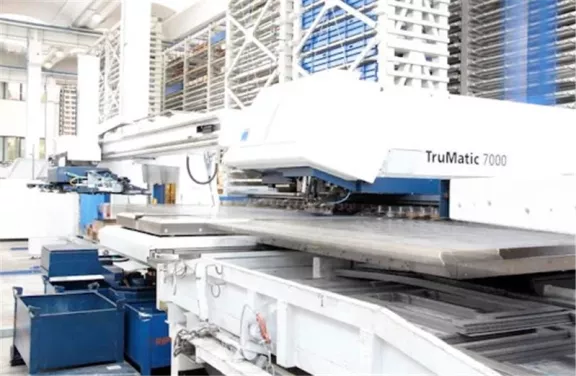
Cold forming is a metalworking process that takes place without heating the material, unlike hot forming. The metal, in the form of sheet metal or semi-finished product, is deformed through the combined action of the die and press, which make it possible to obtain the desired geometry.
This makes it possible to achieve high levels of dimensional accuracy, excellent surface finishes, and high productivity, making cold forming one of the best technologies for manufacturing components for medium-large and large series production.
The cold forming process: operational phases
The operational phases of the cold forming process do not end with the operations under the press. In order to pursue the main objective of guaranteeing quality, repeatability, and reliability over time, Minifaber divides the process into several steps.
Mold design
The first step is the design of the mold, developed internally by the technical team based on the customer's specifications. This phase is crucial because it determines:
- the feasibility of the component,
- the quality of the final result,
- the efficiency of the production process.
The mold design phase aims to produce the component according to the design, respecting and optimizing the geometries, tolerances, and all the requirements.
Mold production
Once the design has been validated, the mold is produced using advanced machine tools, both for chip removal and electroerosion. The heat treatment of the active parts of the mold and the polishing of the surfaces are of fundamental importance for the durability of the molds. The machined parts of the mold must be carefully checked.
The quality of the mold is a determining factor in ensuring consistent production, reducing waste, and allowing for reworking over time.
Selection and control of the material to be stamped
The choice of material is fundamental for cold stamping and, similarly, so is the control phase.
The material almost always comes in the form of ribbons wound in rolls, in some cases flat forms such as sheets, discs, strips or suitably shaped pieces are used. It is necessary to pay close attention to the mechanical, chemical, and dimensional requirements of this material, as even small variations can affect the behavior of the metal during cold deformation. This is where Minifaber's mechanical testing laboratory comes into play, equipped with machines for tensile testing, chemical analysis, microhardness testing, and more.
Cold forming
The stamping phase takes place using a mold that shapes the piece and a press with carefully set parameters that provides the energy for the deformation of the material. It is essential to choose the most suitable lubricant, dosed in a controlled manner on both the material and the mold parts. The metal is thus progressively deformed until the desired piece is obtained, maintaining dimensional stability and surface quality.
Finishing and treatments
If required, the semi-finished or finished product can undergo further finishing operations, such as:
- deburring,
- degreasing and washing,
- painting,
- galvanizing,
- other surface or heat treatments.
These processes allow the component to be adapted to the functional, aesthetic, or regulatory specifications of the target sector.
Assembly
Sometimes, assembly operations with other components, such as welding and mounting, are required. In this case, the customer is provided with a more complete and advantageous service.
Quality control
Quality control accompanies the entire production process. The processing parameters are constantly monitored and the parts undergo dimensional and functional checks, with data recorded electronically, to ensure compliance with the specifications agreed with the customer and repeatability over time.
Multiple applications of cold metal forming
Thanks to its industrial flexibility, cold metal forming is used in numerous production areas. Over time, Minifaber has developed specific expertise in the manufacture of:
- deep drawing dies
- Shearing and bending dies
- progressive dies,
- transfer dies.
These technologies make it possible to respond to different production needs, from the manufacture of complex, high-precision components to high-volume production.
The sectors in which cold forming is applied include:
- electromechanical,
- medical,
- vending,
- household appliances,
- kitchen robotics with materials suitable for food contact,
- professional lighting,
- gas distribution.
The variety of applications has helped to consolidate cross-cutting know-how, which is essential for tackling projects with different technical and regulatory requirements.
Cold forming: which metals can be processed
The most suitable materials for cold forming are those that can be plastically deformed without compromising their properties. These include:
- ferrous materials, including pre-galvanized and pre-painted
- stainless steel
- aluminum and its alloys
- copper and its alloys, such as brass and cupronickel.
In-depth metallurgical knowledge allows us to carefully select and control materials already at the procurement stage, verifying their mechanical, physical, and chemical properties, thus reducing the risk of non-compliance and optimizing the production process. This knowledge is put at the service of the customer already in the initial analysis phase, collaborating and co-designing to find the best technical and economic solutions.
Stainless steel stamping: a strategic material
Thanks to its resistance to corrosion and oxidation, stainless steel is one of the most widely used materials. The most common alloys, such as austenitic and ferritic steels, are particularly suitable for stamping, and austenitic steels are also suitable for deep stamping.
Stainless steel forming is used in particularly sensitive sectors, such as:
- electromedical,
- household appliances
- components in contact with food,
- applications requiring high standards of hygiene and durability.
The combination of material and process allows for the production of reliable, repeatable components that comply with the relevant regulations.
Advantages and limitations of cold metal forming
Cold forming offers numerous advantages: high precision, productivity, reduced waste, and competitive unit costs in the medium to long term.
However, some limitations must also be considered, as it is necessary to create molds and design the component according to the process.
For this reason, it is particularly suitable when:
- production volumes are medium to high,
- the geometry is stable over time,
- high repeatability of results is required.
Are you considering cold metal forming for a new project or do you want to understand if your component is suitable for a cold forming process? A preliminary technical comparison allows us to analyze materials, volumes, tolerances, and functional requirements, identifying the most effective and sustainable production solution.