Sheet Metal Processing: Sheet Metal Working and Forming Processes in Industrial Manufacturing
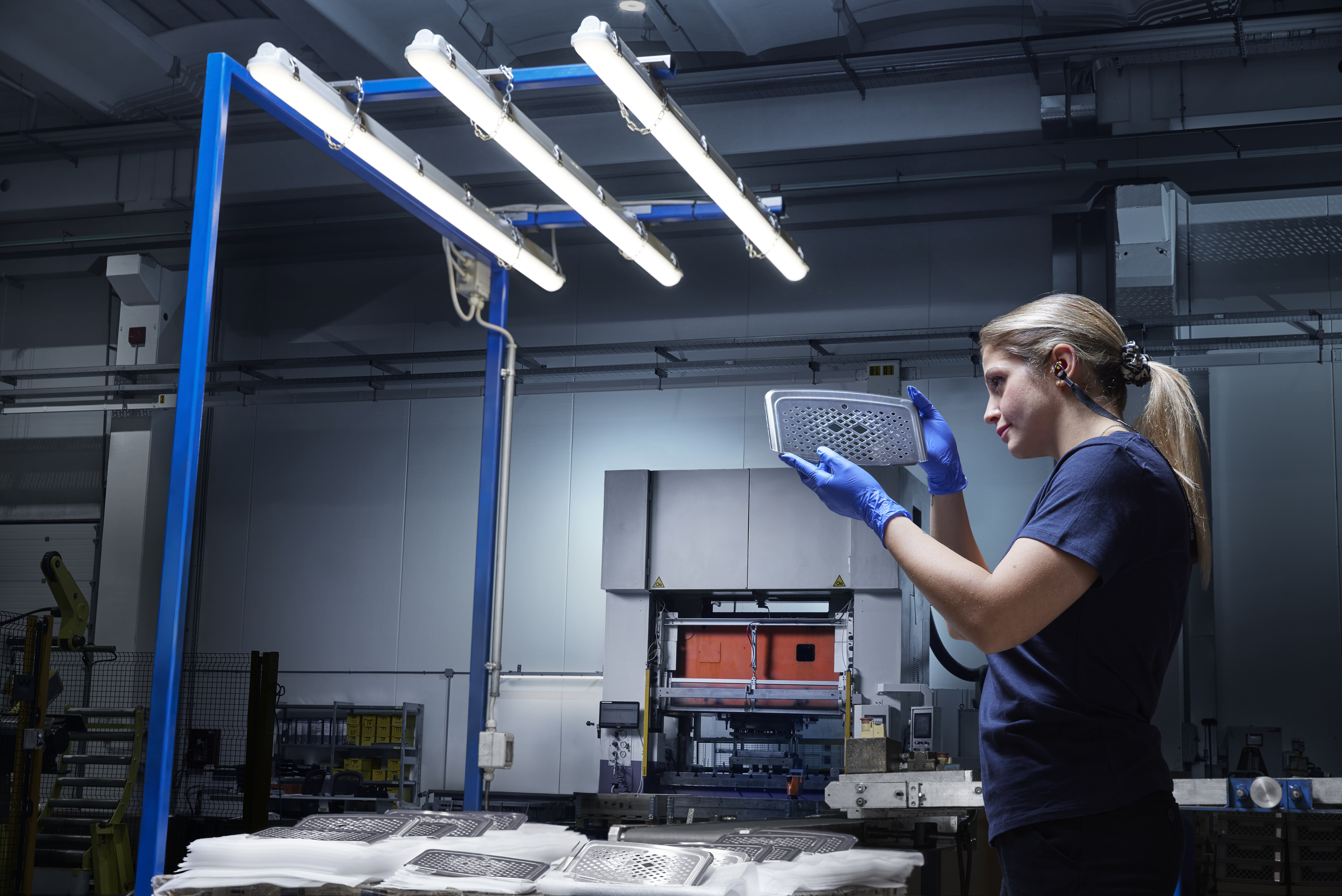
Sheet metal processing is a core manufacturing activity across a wide range of industrial sectors, including home appliances, medical devices, electromechanical systems, energy, professional lighting, and gas distribution, among others.
This guide to sheet metal processing by Minifaber provides a clear, structured overview of modern sheet metal working, focusing on technologies, materials, and industrial best practices that support reliable, scalable, and cost-effective production.
What Is Sheet Metal Processing?
Sheet metal processing refers to a set of industrial operations aimed at transforming transforming sheets or coils into functional components.
Although hot forming is still used for extreme deformations or specific technical needs, cold sheet metal processing represents the industry standard for most applications due to its precision, repeatability, and efficiency.
Why Cold Sheet Metal Processing Is the Industrial Standard
Cold sheet metal processing allows manufacturers to achieve tight dimensional tolerances, clean surface finishes, and competitive cycle times, especially in medium- to high-volume production.
Equally important, cold processing preserves the chemical and mechanical properties of the material, ensuring predictable performance throughout the component’s lifecycle.
From an industrial perspective, cold sheet metal working supports progressive industrialization strategies. All this, it should be emphasized, while fully preserving the chemical properties of the material.
Materials and Thickness Selection in Sheet Metal Processing
The choice of material and thickness is defined - right from the design stage - together with the customer, in order to meet the needs and identify the best procedures for obtaining a finished or semi-finished product that perfectly meets their requirements.
This is Minifaber's approach to sheet metal working, and it is what makes our processes and the support we give our customers unique.
Minifaber processes sheet metal in rolls, sheets, or discs of different materials, thicknesses, and with different degrees of surface finish and, if required, protective galvanic and pre-painted coatings. This allows us to achieve high-performance processing while optimizing and limiting material waste.
All the Steps of Sheet Metal Processing
In the case of flat sheet metal processing starting from sheets, the first step is to cut the material, which defines the shape and prepares the piece for forming.
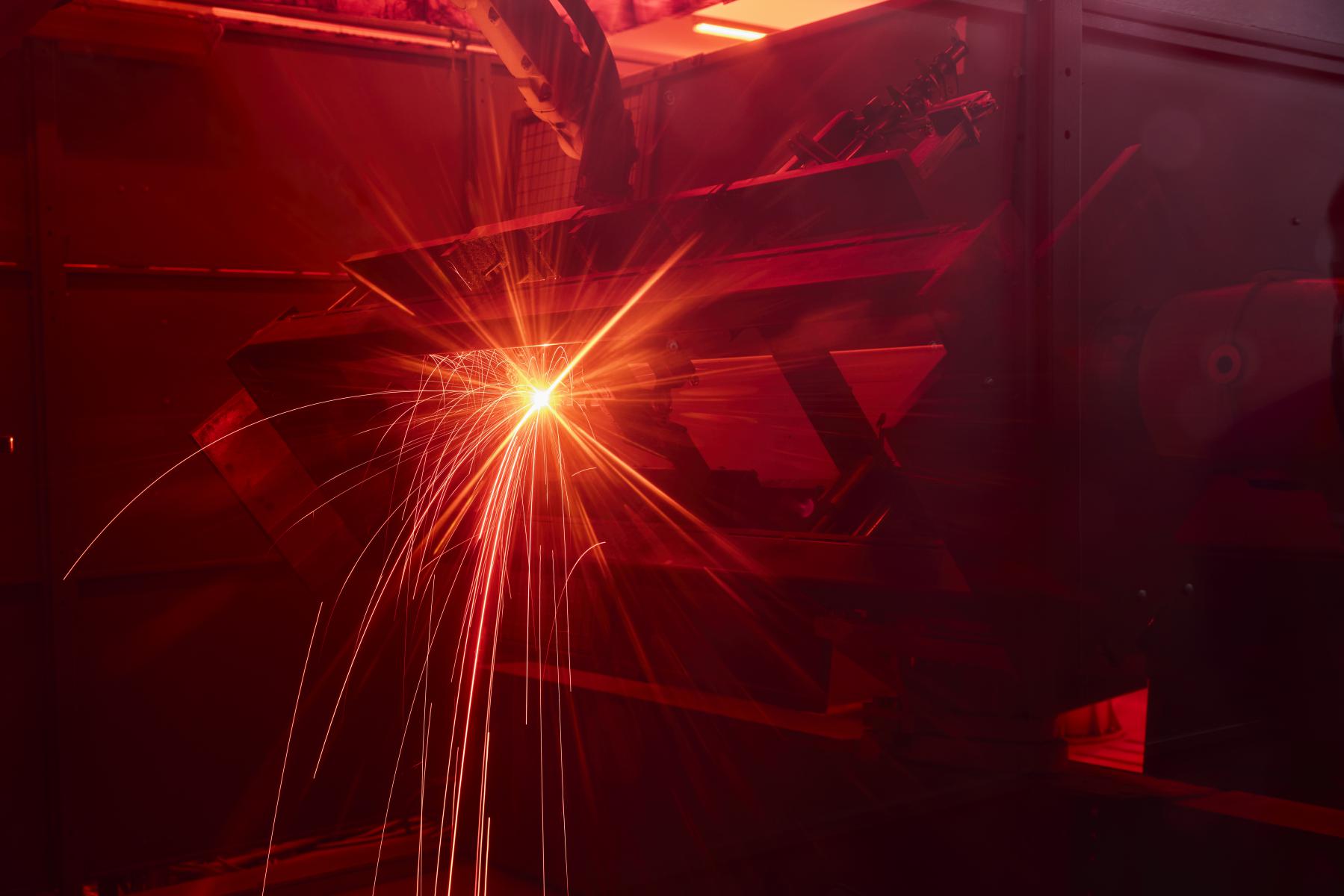
Minifaber can cut sheet metal using punching and both two-dimensional and three-dimensional laser cutting, then continue with other cold working processes, bending and deep drawing (including hydroforming) to give volume, right up to welding - managing all stages internally to optimize time, costs, and quality.
During the deep drawing phase, a flat surface is transformed into a three-dimensional shape, such as pots and sinks, and in this way, the component takes shape, always according to the specifications provided.
From a joining perspective, permanent solutions such as welding are available: MIG/MAG, TIG, resistance, projection, and laser processes, with manual and robotic systems, applicable to all metals, including ferrous materials, stainless steel, aluminum, and copper.
If the project requires it, other types of assembly are available, such as gluing, screwing, riveting, and general assembly. Again, the choice must be made based on the customer's needs and the production technique.
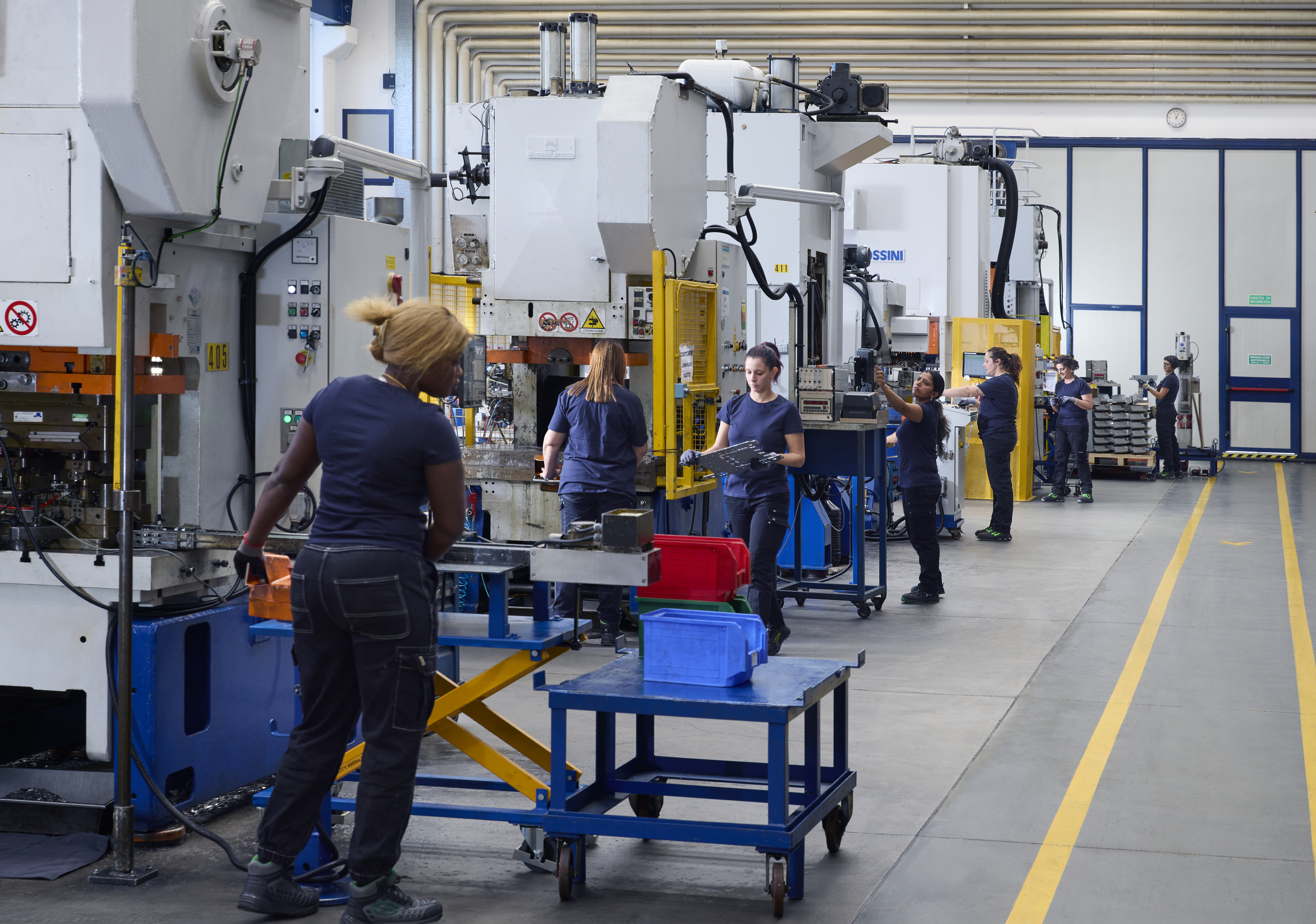
If starting with sheet metal rolls, these can be used directly with mechanical presses and progressive or transfer dies in line with washing systems, and the result can be the finished product ready to be shipped to the customer.
The perceived quality of a sheet metal component also depends on the finish chosen. In addition to choosing the raw material with the appropriate finish, after the cold working and welding stages, a series of finishes such as abrasion and polishing or surface treatments are applied to the sheet metal components, which have both aesthetic and functional purposes.
This gives the sheet metal product an optimal finish, increasing its durability, resistance to oxidation, surface hardness, coating adhesion, and so on.
Cold sheet metal working: the Minifaber approach
Minifaber's approach to cold sheet metal working is consultative, as the customer is supported from the design stage onwards.
Thanks to our state-of-the-art machinery, Minifaber can cover all stages: from shearing to stamping, from deep drawing to bending and punching. In addition, we offer 2D and 3D laser cutting and all the main welding processes.
Advanced technologies, knowledge of materials, attention to detail, and optimization of time and costs allow us to offer superior quality products.